

An Evening With Ladysmith Black Mambazo
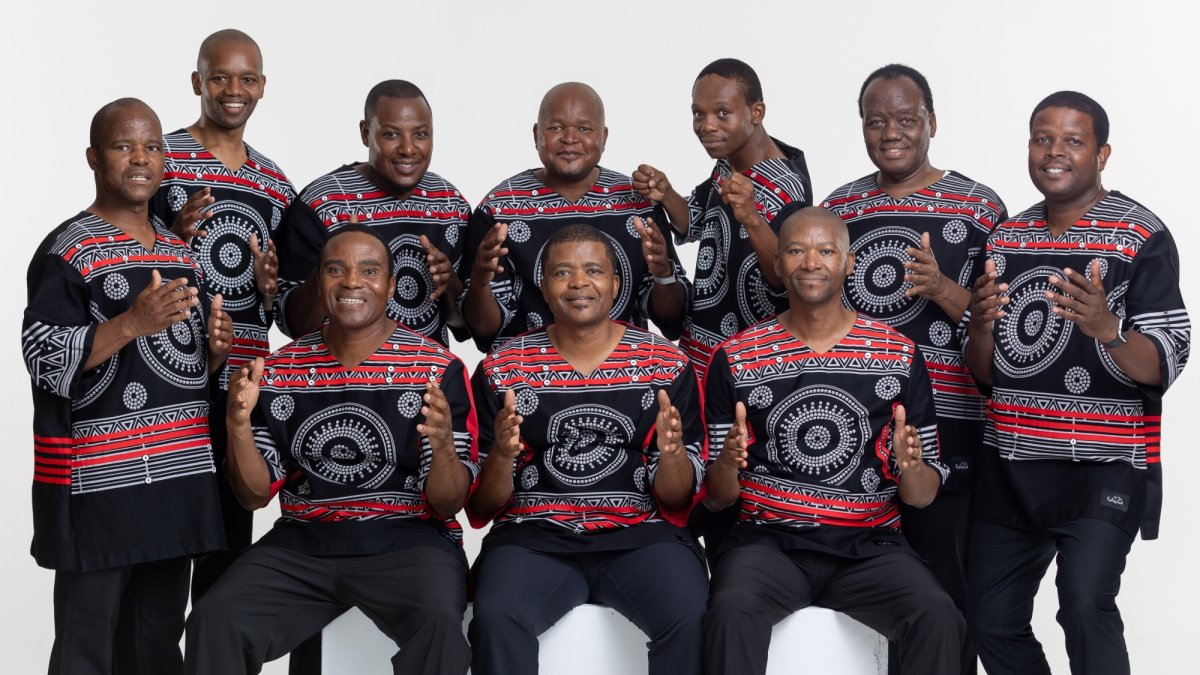
An Evening With Ladysmith Black Mambazo
Sun 02 Aug 2026–Sat 08 Aug 2026
An Evening With Ladysmith Black Mambazo
Celebrating 65 years of Zulu singing + songs from Graceland
The year 2026 marks the 66th anniversary of Joseph Shabalala forming Ladysmith Black Mambazo. It is an impossible story: the teenage Joseph, working on his family farm in apartheid South Africa, allowing himself to dream of creating a group of singers from family members who would perform all over the country. 66 years later his group are a GRAMMY winning global sensation. Tonight they celebrate their journey to the present, singing Zulu songs and songs from Paul Simon’s Graceland, the album that propelled them onto the international stage.
More about the group:
During the dark years of South African Apartheid, Ladysmith Black Mambazo followed a path ofpeaceful protest through songs of hope and love. When Nelson Mandela was released fromprison, in 1990, he said that Ladysmith Black Mambazo’s music was a powerful message ofpeace that he listened to while in jail. When Mandela was awarded the Nobel Peace Prize, in1993, he asked the group to join him at the ceremony. It was Mandela who called LadysmithBlack Mambazo “South Africa’s Cultural Ambassadors to the World.”
The group sings a traditional music style called isicathamiya (Is-Cot-A-Mee-Ya), whichdeveloped in the mines of South Africa. It was there that black workers were taken to work faraway from their homes and families. Poorly housed and paid, the mine workers wouldentertain themselves, after a six-day work week, by singing songs into the wee hours onSaturday night and Sunday. When the miners returned to their homes, this musical traditionreturned with them.
In the mid-1980s, American singer/songwriter Paul Simon famously visited South Africa andincorporated the group’s rich harmonies into his renowned Graceland album – a landmarkrecording considered seminal in introducing World Music to mainstream audiences. Thisbrought the group to the attention of music lovers all over the world, the beginning of a globalmusical career that shows no sign of ending.
After leading his group for over fifty years and approaching his 75th birthday, JosephShabalala retired in 2014, handing the leadership to his three sons, Thulani, Sibongiseni andThamsanqa Shabalala. Having joined their father’s group in 1993, their many years of traininghad prepared them in ways no others could be trained. Now, carrying their father’s dream intothe future, the Shabalala Family continues the group’s success for all the world to hear.
Ladysmith Black Mambazo is Thulani Shabalala, Sibongiseni Shabalala, Thamsanqa Shabalala,Msizi Shabalala, Babuyile Shabalala, Gagamela Shabalala, Mfanafuthi Dlamini, Pius Shezi andSabelo Mthembu.



